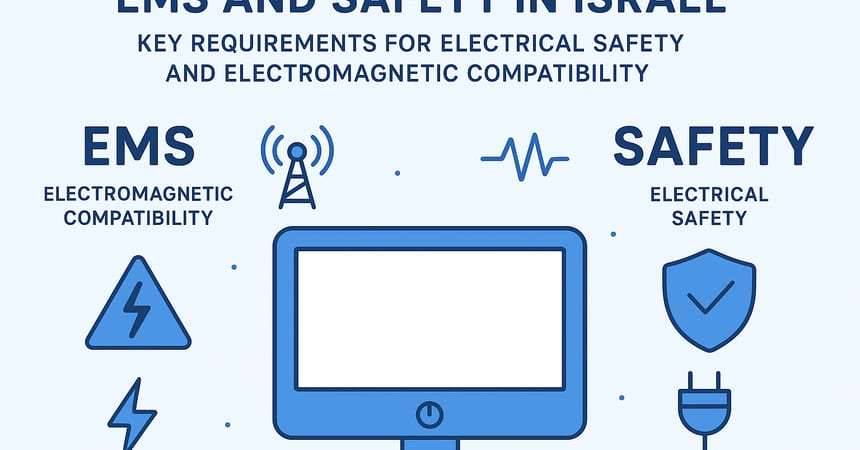
Electrical Safety and EMC Requirements in Israel
Israel's certification system covers Safety and EMC separately. Which IEC standard applies to which product class, and what each test programme covers.
CSA certification is one way to satisfy Rule 2-024 of the Canadian Electrical Code Part I (CSA C22.1), which requires electrical equipment to be approved by a certification body the Standards Council of Canada has accredited. CSA Group is one such body; UL Solutions and Intertek are others, and their cUL and cETL marks carry the same legal weight. Radio approval is federal and separate, under ISED, and the provinces enforce the Code at installation.
Either one. Rule 2-024 of the Canadian Electrical Code Part I says electrical equipment must be approved before it is connected to an installation, and every province writes that rule into its own electrical safety act. Approved means certified to the relevant CSA C22.2 standard by a body the Standards Council of Canada (SCC) has accredited. CSA Group wrote most of the C22.2 series, but UL Solutions and Intertek hold SCC accreditation too, and the Canadian marks they issue (cUL and cETL) meet Rule 2-024 exactly as a CSA mark does.
The standard matters more than the mark. A kettle or a vacuum cleaner is tested to CSA C22.2 No. 60335-1, the Canadian adoption of IEC 60335-1 for household appliances, plus the Part 2 sheet for its type. A charger, a router or an amplifier goes to CSA C22.2 No. 62368-1, the Canadian edition of the audio, video and ICT safety standard. A luminaire goes to CSA C22.2 No. 250.0. Ask the body which standard it will certify to, because the standard decides which tests run and which Canadian deviations from the IEC text apply.
The Code defines extra-low voltage as 30 V or less and low voltage as anything above 30 V up to 750 V, and Rule 2-024 covers both. If it plugs into a Canadian outlet it is electrical equipment, whatever comes out the other side. A plain UL mark is a United States listing. cUL covers Canada, cULus covers both countries, and the inspector reads the mark on the product because the certificate in your file never reaches the site.
ISED certification is the federal approval for anything that transmits. A Wi-Fi or Bluetooth product is tested to RSS-247, the standard for licence-exempt LAN devices in the 2.4 GHz and 5 GHz bands, on top of RSS-Gen, the general requirements that apply to every radio standard. ISED classes transmitters as Category I equipment: a certificate from an ISED-recognised certification body is required before sale, the product is entered in the Radio Equipment List, and the certification number must appear on the label.
Receivers and digital devices with no transmitter are Category II. They fall under ICES-003, the interference-causing equipment standard for information technology equipment, but ICES-003 is a supplier declaration: you test, you keep the report, and you mark the product CAN ICES-003(B)/NMB-003(B) for a residential Class B device. No number is issued and nothing is filed, so the label is the only visible evidence.
FCC and ISED share most of their test methods, so one lab session serves both when it is planned that way. The Canadian additions are small: RSS-Gen wants the licence-exempt notice in English and French in the user manual, and an applicant outside Canada must appoint a Canadian representative. Doing FCC in March and ISED in September means paying for the chamber twice.
Three federal instruments sit outside certification and can hold a shipment anyway. The Canada Consumer Product Safety Act prohibits selling a consumer product that is a danger to human health or safety, and section 14 obliges you to report a safety incident to Health Canada within two days of learning of it, with a written report inside ten days.
The Energy Efficiency Regulations, 2016, administered by Natural Resources Canada (NRCan) under the Energy Efficiency Act, cover refrigerators, dishwashers, clothes washers, room air conditioners, external power supplies and general service lamps. A regulated product needs an energy efficiency verification mark from an SCC-accredited body and, for major appliances, the bilingual EnerGuide label, and the importer files an energy efficiency report with NRCan before the first shipment. Energy verification is a separate accreditation scope from safety, so the body that certified your C22.2 file may not hold it.
Labelling is bilingual. The Consumer Packaging and Labelling Act requires English and French on the package, and Quebec's Charter of the French Language, tightened by Bill 96 in 2022, extends French to the product itself, its instructions and its warranty. Safety markings and warnings are in scope. None of this appears on a certificate. The certificate issues cleanly and the pallet waits at a distribution centre for a missing French warning.
| Instrument | Covers | Who issues or enforces |
|---|---|---|
| CSA C22.1, Canadian Electrical Code Part I | Rule 2-024: electrical equipment must be approved | Provincial electrical safety authorities |
| CSA C22.2 No. 60335-1 | Household appliances, safety | SCC-accredited body: CSA, cUL or cETL mark |
| CSA C22.2 No. 62368-1 | Audio, video, IT and communication equipment, safety | SCC-accredited body |
| CSA C22.2 No. 250.0 | Luminaires | SCC-accredited body |
| RSS-Gen and RSS-247 | Licence-exempt transmitters, 2.4 and 5 GHz | ISED certification number, Category I |
| ICES-003 | Digital apparatus, emissions | Supplier declaration, CAN ICES-003(B)/NMB-003(B) label |
| Energy Efficiency Regulations, 2016 | Regulated appliances, lamps, power supplies | NRCan; verification mark from an SCC-accredited body |
| Canada Consumer Product Safety Act | All consumer products | Health Canada |
A plain UL or ETL mark without the c prefix is a United States listing only. CSA, cUL and cETL all satisfy Rule 2-024; cULus and cETLus cover both countries. Check the mark on the product, since the certificate in the file may be the US one.
Everything on the left is something to find before the project starts. Everything on the right is ours. Send what you have and we will tell you what is missing.
You provide
We provide
Certification is required for electrical equipment, but not specifically from CSA. Rule 2-024 of the Canadian Electrical Code Part I requires approval by a body accredited by the Standards Council of Canada, and several bodies hold that accreditation. A cUL or cETL mark meets the rule exactly as a CSA mark does.
Only if it carries the c prefix. A plain UL mark is a United States listing. cUL means the product was certified to the CSA C22.2 edition of the standard, and cULus covers both countries. The difference is printed on the mark itself, so an inspector checks the product first.
It is the Canadian federal approval for radio equipment, administered by Innovation, Science and Economic Development Canada. Equipment is tested to RSS-Gen and the applicable Radio Standards Specification, RSS-247 for Wi-Fi and Bluetooth, and receives a certification number that must appear on the product. It is separate from electrical safety certification.
Substantially, yes. RSS-247 and FCC Part 15 Subpart C use closely matched test methods, so one test campaign can serve both submissions with a few additional measurements for the Canadian limits. Running them together avoids a second chamber booking.
Israel's certification system covers Safety and EMC separately. Which IEC standard applies to which product class, and what each test programme covers.
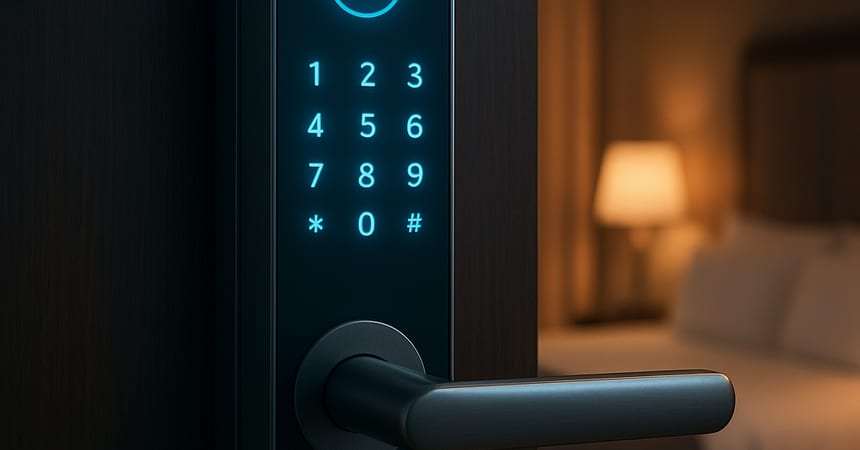
Electrical safety, EMC, fire, cybersecurity and bilingual labelling all apply to a connected lock. The six-step route, and the provincial traps.
What falls inside the EMC regulation, which products certify and which declare, the three certification schemes, and the two exclusions worth knowing.
One specialist owns your file from the first email to the registered certificate. Every one of them has recorded a briefing on their field.
Send the product name, HS code and technical data. You get back the applicable route, the document list and a timeline, before any commitment.
Scoping is freeReply within one working day