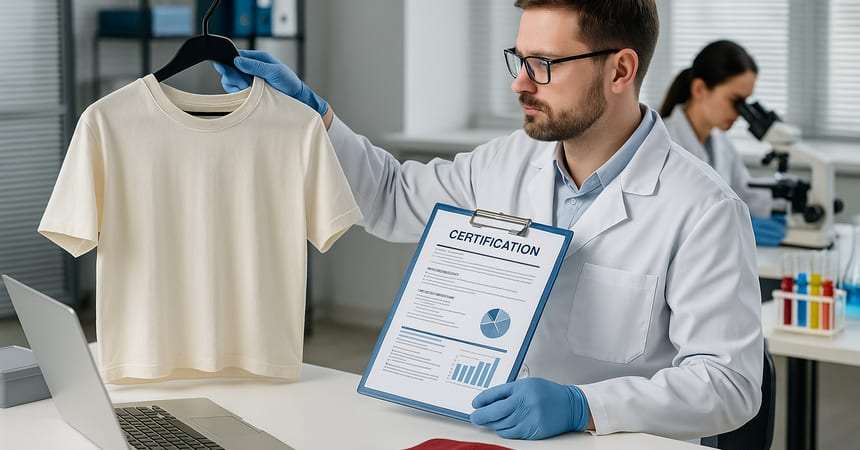
Certify Before You Contract: A Children's Wear Case
Manufacturers routinely find a distributor, sign a supply contract and plan deliveries before thinking about certification. For children's clothing that order is dangerous: synthetic fibre content that is normal elsewhere fails hygroscopicity testing under GOST, and no certificate is issued.
Why is the usual order wrong?
Foreign manufacturers usually open a new market by looking for clients, business partners or distributors. That makes sense on its own terms.
What happens next is the problem. With a customer found and a supply contract signed, elated by the success, most manufacturers forget about certification entirely, until it becomes urgent.
The question that ends projects: what if, right before delivery, your product turns out not to comply with the importing country’s requirements?
The case
A company was about to export dresses for six-year-old girls. Client found, contract signed, delivery planned. Certification did not appear to be a significant obstacle.
It was.
Requirements for children’s products are very strict, which is right and fair on one hand, and difficult for producers on the other. Children’s clothing must contain the least possible amount of synthetic fibre, and a great many garments fail laboratory testing for exactly this reason.
The mechanism is simple. Clothing with an inappropriately high proportion of synthetic fibre cannot pass tests on hygroscopic rates, the ability of the fabric to absorb water. The result is a negative test report: the product’s quality does not meet GOST requirements, and no certificate can be issued for it.
What can a manufacturer do after a failed test?
One mistake does not block market access permanently.
Even after a negative first result, the producer can modify the product in line with the comments in the test report and submit it for testing again. Once the defects are corrected, the certificate of conformity is issued.
The position it leaves you in is less good: renegotiating a delivery date with a customer who has already signed, while the product is redesigned.
What order should you follow?
Start market entry with certification, not with contracts.
Once you know the product’s quality complies with the importing country’s requirements, you can sign agreements and plan deliveries with confidence. The order costs nothing to change and saves the only thing that cannot be recovered, the delivery window you already promised.
Sources
- TR CU 007/2011, On the safety of products intended for children and adolescents, Eurasian Economic Commission
- GOST standards for hygroscopicity and textile testing adopted alongside TR CU 007
Frequently asked questions
Why do children's clothes fail certification tests?
Because requirements for children's products are strict on synthetic fibre content. Clothing with an inappropriately high proportion of synthetic fibre cannot pass tests on hygroscopic rates, the fabric's ability to absorb water, so the test report is negative and no certificate can be issued.
Is a failed test the end of the project?
No. One mistake does not block market access permanently. The producer can modify the product in line with the comments in the test report and submit it for testing again; once the defects are corrected, the certificate of conformity is issued.
What is the recommended order?
Certification first, then contracts. Once you are confident the product's quality meets the importing country's requirements, agreements with customers can be signed and deliveries planned with confidence, rather than the other way round.
Not sure which of these applies to your product? Send it and we will tell you
Related articles
Auditing a Children's Clothing Factory in China
TR CU 007 requires a site audit for children's clothing. What the expert checked in Foshan, in what order, and what the visit was actually assessing.
Testing on Site Under TR CU 010 Scheme 5d: A Case
A 5d factory test on polyol mixers at the installation site, what was checked beforehand, the three problems the expert found, and how each was resolved.
Clothing Certification in 2025: What Gets Checked
Fabric composition drives which tests apply, the label is the product's passport, and a lab discrepancy means no certificate, plus fines for false labelling.