Testing on Site Under TR CU 010 Scheme 5d: A Case

Under scheme 5d the declaration cannot be registered until an expert has visited the site, tested the equipment in operation, and issued a Type Certificate. This case, polyol mixers tested at the installation site instead of in Korea, shows the four checks made beforehand and the three problems that still surfaced on the day.
What does scheme 5d require?
To register a declaration of conformity under TR CU 010 scheme 5d, a visit to the production site for product research and testing has to be organised. After the audit and the tests, the certification body issues a Type Certificate, a design research certificate, and a test report. The declaration is then registered on the basis of those two documents.
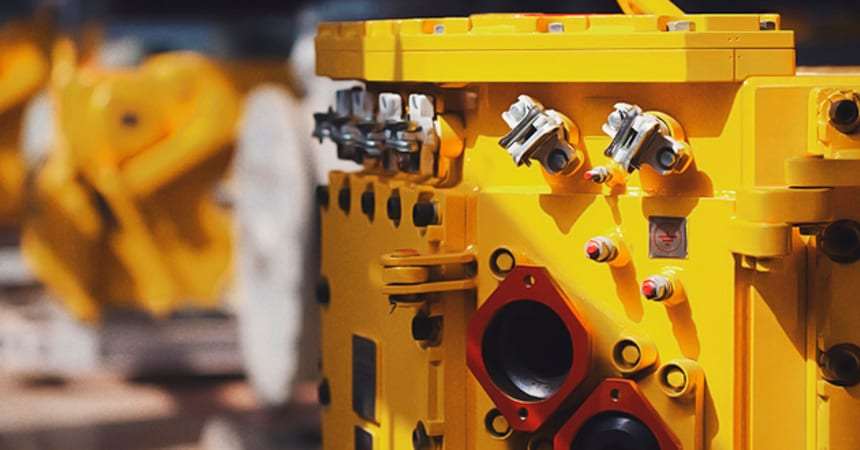
In this case the products were mixers for mixing polyol, installed at a production site inside the Union.
Testing in Korea, where the mixers are made, was an option. With travel restricted during COVID-19, on-site testing was the better one.
What we checked before booking the date
Four things, in order:
- Documents collected. Everything needed for the declaration, prepared with the manufacturer. Clients are told the document list well in advance, because it is the item most likely to move the date.
- Equipment arrived and installed at the factory.
- Model agreed. Which of the mixers the certification body expert would test, settled with the manufacturer before the visit.
- Operating mode confirmed by the factory. This is the critical one. The expert tests with the equipment running so the working technical characteristics can be recorded, and those recorded values are what the documentation is compiled from.
With the factory ready to receive us, we agreed a travel date with the test expert.
What did the expert find on the day?
Despite the preparation, three problems surfaced during the inspection.
| # | Problem |
|---|---|
| 1 | No marking plate on any of the three models |
| 2 | Thermal insulation not fitted, the equipment must be fully ready for operation during tests |
| 3 | The selected model could not be connected for operation |
Any of these can end a visit. In such cases the expert can refuse to test and go back, with the travel spent and the date lost.
How each was resolved
- The marking plate. The design was already complete and the label was about to be installed on the equipment, so the gap was documented rather than fatal.
- Thermal insulation. It would be fitted within a short period and would not significantly affect the recorded indicators.
- The test model. We switched to another mixer that was in operating mode. Its volume was larger, so testing ran several hours longer than planned.
After testing, every defect the expert identified had to be corrected. Only then did the expert prepare the documentation needed to register the declaration of conformity.
What to take from this case
The four pre-checks did not prevent all three problems. The one that mattered, confirming the equipment was in operating mode, was the reason a substitute model was available at all. Without it, the visit would have ended with nothing tested and the expert on the return train.
If you take one thing into a 5d visit, make it this: have more than one unit genuinely running.
Sources
- TR CU 010/2011, On the safety of machinery and equipment, Eurasian Economic Commission, scheme 5d
- National classification of hazardous production facilities
Frequently asked questions
Why test on site instead of at the manufacturer?
Scheme 5d requires a visit to the production site for product research and testing. Where the equipment is already installed and operating at the customer's site, testing there can be more practical than travelling to the country of manufacture, particularly when travel is restricted, as it was during the pandemic.
What has to be true before the expert arrives?
Four things: the documents are collected, the equipment has arrived and is installed, the specific model to be tested is agreed with the manufacturer, and the factory has confirmed the equipment is in operating mode. The expert tests with the equipment running, because the working technical characteristics are what the documentation is compiled from.
Can the expert refuse to test?
Yes. If the equipment is not ready, no marking plate, incomplete assembly, or a model that cannot be connected for operation, the expert can decline to test and leave. In this case the issues were resolved on the day by fixing what could be fixed and switching to a model that was running.
Not sure which of these applies to your product? Send it and we will tell you
Related articles
EAC Approval for Pumping Equipment: Which Form Applies
Industrial pumps declare, household pumps certify, Ex pumps have one route only. The regulations that stack on top, plus a field-test case study.
Scheme 5d Under TR CU 010: A Step-by-Step Guide
When the 5d declaration scheme applies, why a hazardous facility changes the answer, and the five steps from enquiry to a registered declaration.
Certifying a Chainsaw for the EAEU: One Document or Two
Why a petrol chainsaw falls under TR CU 010 and TR CU 020 but not TR CU 004, and why splitting the approval into two documents saved a round of testing.