Importing Carpet Samples from Istanbul for Testing
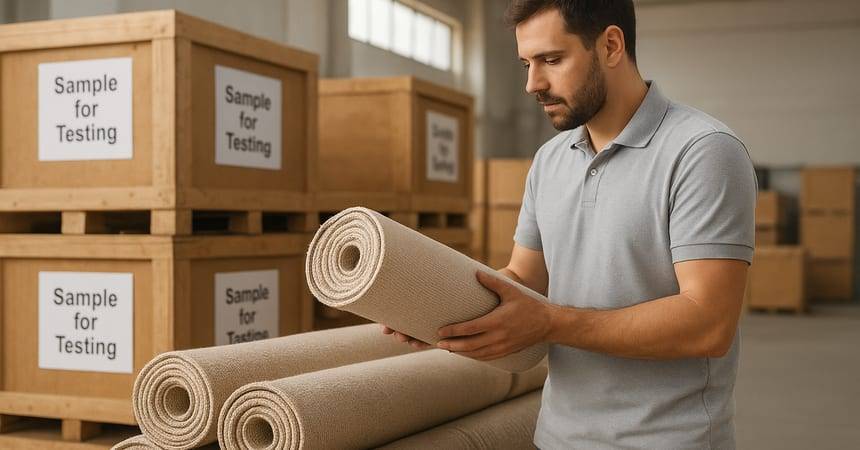
Getting carpet samples from Turkey to an accredited laboratory is a customs exercise as much as a logistics one. Every document has to say the goods are for certification testing and not for sale, and incorrect paperwork means delay and extra fees.
Which carpets require testing?
All of them:
- Natural wool or cotton carpets
- Synthetic carpets in polyamide, polypropylene or viscose
- Flooring for residential and commercial use
- Runners, carpet tiles and decorative pieces
The purpose is to verify product safety, colour fastness, the absence of harmful substances, and compliance with fire safety standards.
How do you prepare the shipment?
Before anything moves:
- Define the list of samples
- Confirm quantity and size requirements with the laboratory; a sample too small for the test method is a wasted shipment
- Prepare the documents: commercial invoice, packing list, and a non-commercial import letter
- Label the samples properly
- Notify customs that the import is for testing only, not for sale
Getting through customs
Four things keep it smooth:
- State “for certification testing” clearly in all documents
- Attach a letter from the testing laboratory or certification body
- Use the correct HS codes
- Arrange temporary import where required
Incorrect paperwork here produces customs delays and extra fees. And because the samples are the input to everything downstream, a week lost at the border is a week added to the certificate.
What does the laboratory test?
| Test family | Covers |
|---|---|
| Physical and mechanical | Durability, density, strength |
| Colour fastness | To wear, light and water |
| Fire safety | Fire safety parameters |
| Hygienic | Formaldehyde levels and similar indicators |
The laboratory issues a test report, which is what the certificate or declaration of conformity is then issued on.
Sources
- TR CU 017/2011, On the safety of light industry products, Eurasian Economic Commission
- Eurasian Economic Union customs procedures for temporary import of samples
Frequently asked questions
Which carpets need testing?
All types: natural wool or cotton carpets; synthetics in polyamide, polypropylene or viscose; flooring for residential and commercial use; and runners, carpet tiles and decorative pieces. Testing verifies safety, colourfastness, absence of harmful substances and fire safety compliance.
What must the shipping documents say?
That the import is for certification testing only, not for sale, stated clearly in all documents. Attach a letter from the testing laboratory or certification body, use the correct HS codes, and arrange temporary import where required. Incorrect paperwork leads to customs delays or extra fees.
What does the laboratory test?
Four families: physical and mechanical properties such as durability, density and strength; colour fastness to wear, light and water; fire safety parameters; and hygienic indicators such as formaldehyde levels. The resulting test report supports the certificate or declaration of conformity.
Not sure which of these applies to your product? Send it and we will tell you
Related articles
Clothing Certification in 2025: What Gets Checked
Fabric composition drives which tests apply, the label is the product's passport, and a lab discrepancy means no certificate, plus fines for false labelling.
Preparing Clothing for Laboratory Testing: A Checklist
How many samples, in what state, with what composition data and what labelling, the four preparation areas that decide whether testing passes first time.
On-Site Factory Audit in Turkey for TR CU 017
A one-day audit and sampling visit to an Istanbul t-shirt factory: the five steps, what to confirm before travelling, and why ISO 9001 shortens it.