What Counts as Equipment Operating Under Excess Pressure
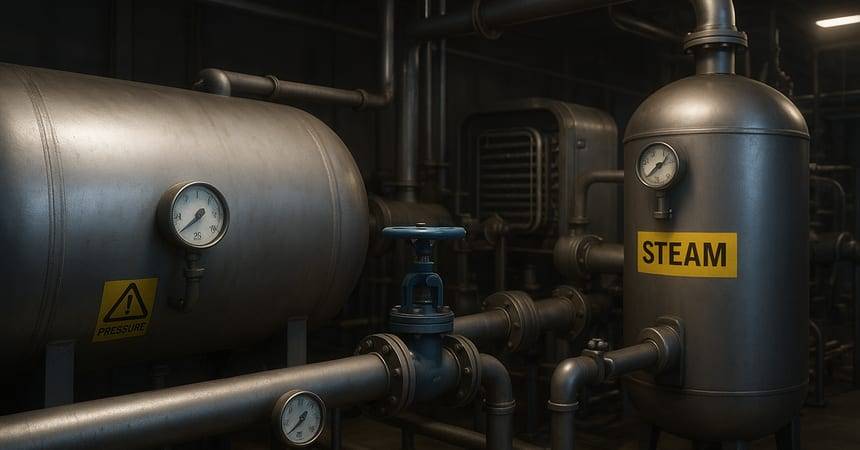
One number decides it: internal pressure more than 0.05 MPa above atmospheric. Above that line, equipment is classed as high-risk regardless of what it is for, vessels, boilers, pipelines, heat exchangers, fittings and whole process units alike, and mandatory conformity assessment applies before commissioning.
Where is the line?
Internal pressure exceeding atmospheric by more than 0.05 MPa. That is the whole test.
Cross it, and the equipment is classified as high-risk. What follows from that classification is not optional: strength calculations, certified materials, protective devices, and mandatory conformity assessment of every system element containing a working medium under excess pressure before it is commissioned.
The key point is what the test ignores. Not the purpose of the device, not the industry, not the size, only the physical fact of the pressure. A device designed for a benign application and a device designed for a hazardous one are assessed by the same criterion.
Which devices does it capture?
| Type | Typical examples |
|---|---|
| Pressure vessels | Receivers, tanks, gas cylinders, pressure accumulators |
| Boilers | Water-heating and steam boilers |
| Pipelines | Lines transporting gases or hot liquids |
| Fittings | Valves, flanges, gates, safety devices |
| Process equipment | Heat exchangers, autoclaves, steam generators, filters, membrane devices |
| Units | Complete technological modules with one or more pressure-loaded components |
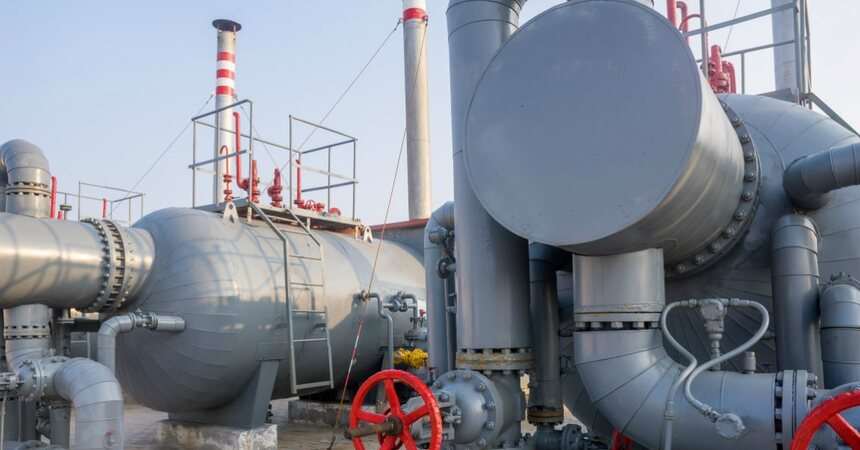
These appear across energy, industry, oil and gas, utilities and mechanical engineering, anywhere a process requires heating, transporting or storing a substance under pressure.
Why is each type treated as it is?
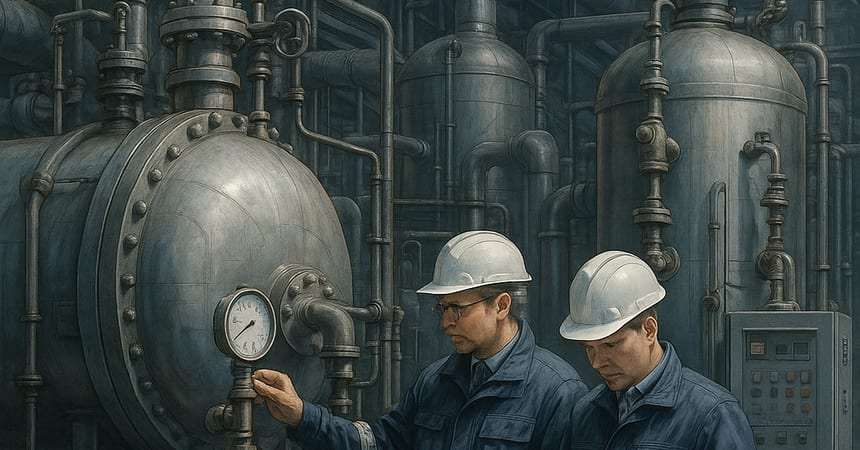
Pressure vessels store or transport gases and liquids at high pressure. They have to withstand overloads, temperature swings and external impact while keeping both tightness and structural integrity.
Boilers carry higher requirements than most, because they combine high temperature with high pressure and both parameters can shift substantially in service. That puts the load on materials, welds and safety valves. Improper design or operation leads to critical failure, which is why boilers sit squarely inside pressure equipment regulation rather than at its edge.
Pipelines may be metal, composite or a specialised material chosen for corrosion resistance and internal loads, depending on what they carry. The fittings that regulate and protect those systems, valves, flanges, gates and safety devices, are pressure equipment components in their own right.
Chemical, petrochemical and gas applications are the demanding end. Pressure can change abruptly and the working media are often aggressive, so the design has to account for corrosion resistance, chemical compatibility and readiness for extreme conditions.
What follows from the classification?
Regardless of how simple or complex the product is, excess internal pressure makes it potentially hazardous, and that brings three consequences:
- The design must be supported by strength calculations
- The materials must be certified
- Protective devices must be present and sized for the duty
And before commissioning, the conformity assessment has to be complete, for every element of the system holding a medium under excess pressure, not only for the headline item.
Sources
- TR CU 032/2013, On the safety of equipment operating under excessive pressure, Eurasian Economic Commission
- GOST 34347-2017, Vessels and apparatus of steel welded. General specifications
Frequently asked questions
What is the threshold for excess pressure equipment?
Internal pressure exceeding atmospheric pressure by more than 0.05 MPa. Above that figure the equipment is automatically classified as high-risk and becomes subject to mandatory conformity assessment before commissioning, whatever the device is used for.
Does the purpose of the equipment matter?
No. The classification turns on the physical fact of internal pressure above the threshold, not on the application. A domestic pressure accumulator and a petrochemical autoclave are both captured by the same test, and both need conformity assessment before they can be put into service.
Which device types are covered?
Vessels, pipelines, boilers, heat exchangers and fittings, plus autoclaves, steam generators, filters, membrane devices and complete technological units containing one or more pressure-loaded components. Receivers, tanks, gas cylinders and pressure accumulators are among the most common examples.
Not sure which of these applies to your product? Send it and we will tell you
Related articles
TR CU 032: Certificate or Declaration for a Vessel
How TR CU 032/2013 sorts pressure vessels into categories 1 to 4, which category declares and which certifies, and the declaration and certification schemes.
TR CU 032 vs the PED Directive: Two Philosophies
Both regulate pressure equipment safety, but one puts risk analysis on the manufacturer and the other prescribes the requirements. What that means in practice.
TR CU 032/2013: What It Is and What It Requires
Scope, materials, strength calculations, testing, marking and conformity assessment under the EAEU regulation for equipment operating above 0.05 MPa.