Which Products Need RoHS, G-Mark or ECAS
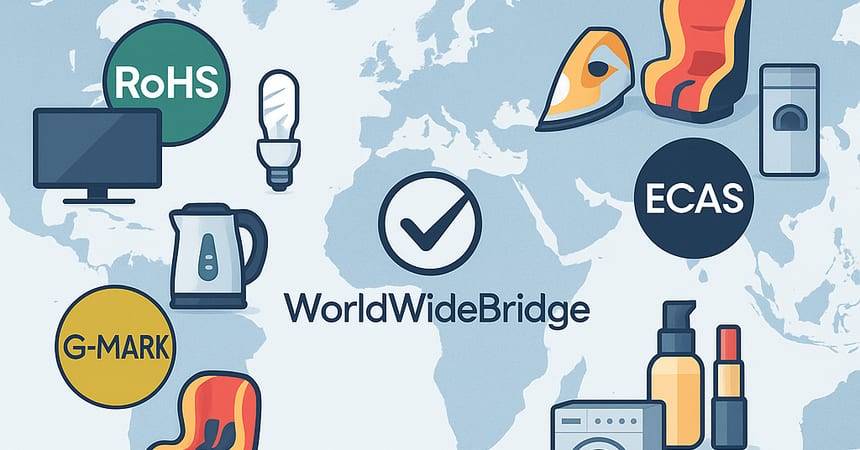
RoHS restricts hazardous substances in electrical equipment for the EU, G-Mark confirms compliance with GCC technical standards, and ECAS covers a broad sweep of products for the UAE. The categories overlap, and the same product frequently needs more than one.
Three schemes, three markets
| Scheme | Market | Purpose |
|---|---|---|
| RoHS | European Union | Restricts hazardous substances in electrical and electronic equipment |
| G-Mark | GCC member states | Confirms compliance with GCC technical standards (SASO, GSO) |
| ECAS | United Arab Emirates | Conformity assessment across a broad product range |
Which products fall under RoHS?
A European Union directive restricting the use of certain hazardous materials in electrical and electronic equipment, lead, cadmium, mercury among them.
Products captured:
- Consumer electronics, televisions, vacuum cleaners, refrigerators
- Computers and components
- Lighting equipment, LEDs included
- Power tools
- Electronic toys
- Electrically powered medical devices
Non-compliance means heavy penalties, recalls, or denial of market access in the EU.
Which products need G-Mark?
Mandatory for certain products imported into GCC member states, Saudi Arabia, the UAE, Kuwait, Qatar and others.
- Children’s products, car seats, strollers
- Gas appliances
- High-risk electrical appliances, irons, kettles, microwaves, sockets
- Certain toys
When does EQM apply instead of ECAS?
ECAS covers a wide range of products for the UAE market, including cosmetics and fragrances, detergents and chemical goods, construction materials, and packaged food and beverages.
High-risk categories may fall under EQM, the Emirates Quality Mark, which brings more rigorous audits and factory inspections. Choosing the right path between the two is what determines both the cost and the timeline of a project, and the product category decides it.
Why the overlap matters
An electronic toy sold into the EU, the GCC and the UAE touches all three schemes: RoHS for substances, G-Mark for GCC conformity, and ECAS for the UAE. The underlying testing frequently supports more than one submission, but only if the scope is planned across all three markets at the start rather than market by market.
Sources
- Directive 2011/65/EU (RoHS 2), European Union
- GSO, GCC Standardization Organization, G-Mark technical regulations
- MOIAT, Ministry of Industry and Advanced Technology, ECAS and EQM schemes
Frequently asked questions
Which products fall under RoHS?
Consumer electronics such as televisions, vacuum cleaners and refrigerators; computers and components; lighting equipment including LEDs; power tools; electronic toys; and electrically powered medical devices. RoHS limits substances including lead, cadmium and mercury.
Which products need G-Mark?
Children's products such as car seats and strollers; gas appliances; high-risk electrical appliances including irons, kettles, microwaves and sockets; and certain toys. G-Mark confirms compliance with the GCC technical standards set by SASO and GSO.
When does EQM apply instead of ECAS?
For high-risk categories. EQM, the Emirates Quality Mark, involves more rigorous audits and factory inspections than ECAS, so identifying which path a product takes matters both to cost and to timeline.
Not sure which of these applies to your product? Send it and we will tell you
Related articles
Products Needing Mandatory UAE Certification in 2025
Six categories, from food and cosmetics to vehicles, baby products and medical devices, with the authority and the specific requirements for each.
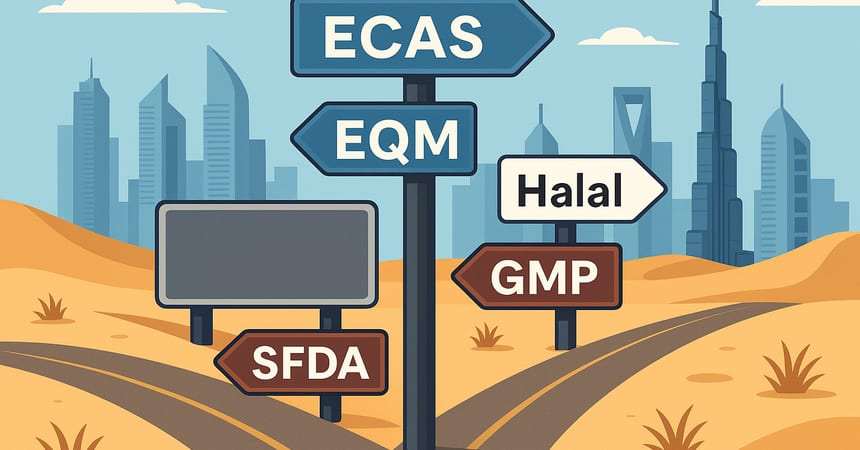
Choosing the Right UAE Certification Without Overpaying
ECAS, EQM, Emirates Halal, GMP and SFDA do different jobs. Five questions that identify which your product needs, and where money gets wasted.
NAS Certification in the UAE: TDRA, ECAS LVE and RoHS
Three mandatory approvals for a network storage device, obtained in under five weeks with no hardware submitted. The documents, timings and fees.