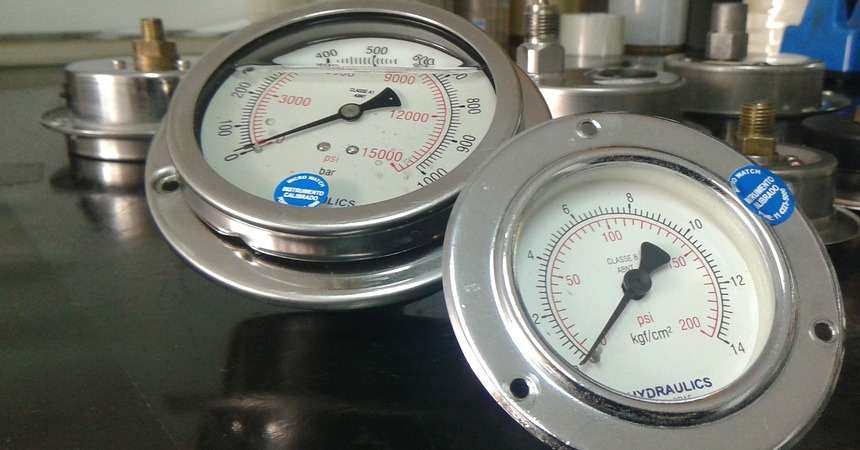
Primary Verification After the Pattern Approval

Primary verification only makes sense alongside the Pattern Approval Certificate, it follows the verification methods document written when the PAC was issued. Primary verification covers a batch that already has a valid PAC: every item is verified before first use, and gets its own certificate.
What is primary verification?
The word turns up constantly in conversations with foreign producers, and rarely with a clear sense of what it means or how it connects to certification.
Verification belongs alongside metrological certification, meaning the Pattern Approval Certificate (PAC). The laboratory verifies against the verification methods document developed while the PAC was being issued. Without a PAC there is nothing to verify against.
It comes in two forms.
| Form | Applies to |
|---|---|
| Primary verification | A specific batch of products already holding a valid PAC |
| Periodical verification (calibration) | The same products, at the interval the PAC specifies |
Primary verification applies only to a batch. An accredited metrological institute must verify each item in it and issue a Primary Verification Certificate before it is assembled into a system or used on its own for the first time.
Periodical verification happens at the interval the PAC names. The laboratory that tested for the PAC sets that interval, and it is quite often different from the calibration period the producer specifies. Plan maintenance from the PAC and not from the manufacturer’s manual.
Where can primary verification take place?
- Deliver the product to an accredited metrology laboratory inside the Union
- Have it verified at the production site before delivery, in which case the producer has to supply the verification and calibration facilities
The applicant can be the producer, or a local representative company.
What documents does verification need?
General:
- Application with the technical and metrological characteristics
- Where the producer is not the applicant, a power of attorney from the manufacturer to the resident applicant
Technical:
- EAC declaration or certificate of safety under the relevant TR CU
- Metrological certificate and the verification methods
- Operational documents, manual, installation instructions, and other technical information in the Union’s working language
- Information about software, where applicable, including declarations
- A photograph of the product
The procedure, in order
- You import the batch.
- You deliver it to the laboratory.
- The laboratory calibrates each item.
- The laboratory issues the verification certificates.
- The batch goes on to its destination, or back to the producer.
Case: a turbine control and overspeed detection system
The producer needed calibration for a product that already held both the EAC certificate and the PAC. All documents were provided in advance, and WorldWideBridge acted as applicant.
Three things made it harder than the five steps above suggest.
Finding a laboratory. The verification requirements for this product were specific enough that an accredited laboratory was difficult to locate at all.
Temporary importation. The products went to the laboratory under temporary import, which imposes a time limit, because they had to go back afterwards to the country where the warehouse was. That complicated the customs side considerably.
Scale. Eight items, 216 measuring channels in total, delivered to an accredited laboratory. Testing and issuing the verification certificate took two weeks.
During the procedure the laboratory asked for additional technical information about installation and data display that was not in the technical documentation. The lesson: the quality of the PAC verification methods and the operational documentation is what keeps the schedule. Everything else in this case was logistics; the only thing that could have delayed it further was a document that had not been written properly a year earlier.
Sources
- National metrology legislation of the EAEU member states, on ensuring the uniformity of measurements
- National registers of approved measuring instrument types
Frequently asked questions
What is the difference between primary and periodical verification?
Primary verification applies to a specific batch of products that already hold a valid Pattern Approval Certificate: an accredited metrological institute verifies each item and issues a Primary Verification Certificate before it is assembled into a system or used. Periodical verification, recalibration, happens at the interval the PAC names.
Who sets the recalibration interval?
The laboratory that runs the PAC tests, and the PAC itself records it. It is quite often different from the calibration period the producer specifies, so plan maintenance around the PAC interval and not the manufacturer's.
Where can primary verification take place?
There are two options: deliver the product to an accredited metrology laboratory inside the Union, or have it verified at the production site before delivery. The second requires the producer to provide the verification and calibration facilities, which is not always practical.
Not sure which of these applies to your product? Send it and we will tell you
Related articles
Pattern Approval Certification: Four Traps to Plan Around
Lead times of 4 to 6 months, sample counts that differ by scheme, a nameplate date rule that voids stock, and the verification step that follows delivery.
Testing on Site Under TR CU 010 Scheme 5d: A Case
A 5d factory test on polyol mixers at the installation site, what was checked beforehand, the three problems the expert found, and how each was resolved.
EAC Approval for Pumping Equipment: Which Form Applies
Industrial pumps declare, household pumps certify, Ex pumps have one route only. The regulations that stack on top, plus a field-test case study.