Luminaire Certification in Europe: LVD, EMC and RoHS
CE certification for luminaires rests on three directives together: the Low Voltage Directive for safety, the EMC Directive for electromagnetic compatibility, and RoHS for restricted substances. The safety standard varies by luminaire type; the EMC and RoHS references do not.
What does CE certification confirm?
That the product conforms to the safety standards adopted in the European Union.
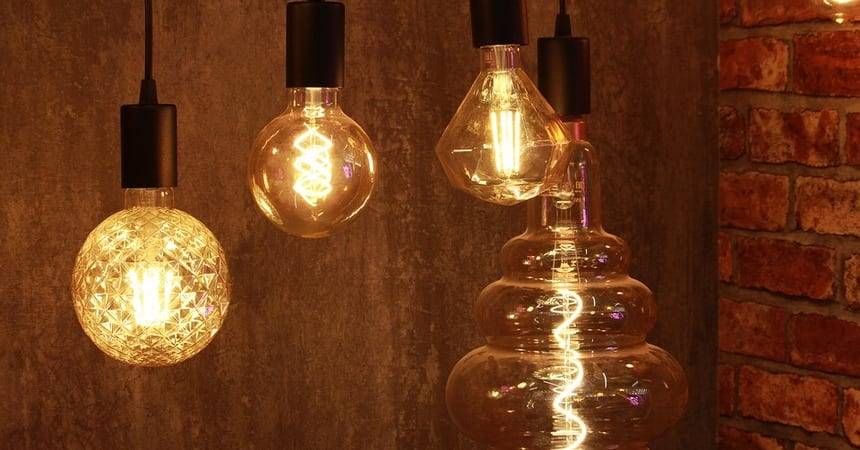
A luminaire is a lighting product in the general sense, indoor and outdoor lights of every kind, and CE certification for all of them rests on the same three directives.
| Directive | Covers |
|---|---|
| LVD 2014/35/EU | Electrical safety |
| EMC 2014/30/EU | Electromagnetic compatibility |
| RoHS 2011/65/EU | Restriction of hazardous substances |
Which standards apply to each luminaire type?
The safety standard varies with the fitting; the EMC and RoHS references do not.
| Type of luminaire | LVD standard | EMC standards | RoHS |
|---|---|---|---|
| Fixed general luminaire | IEC 60598-2-1 | IEC 61547, CISPR 15 | 2011/65/EU |
| Recessed light | IEC 60598-2-2 | IEC 61547, CISPR 15 | 2011/65/EU |
| Street light | IEC 60598-2-3 | IEC 61547, CISPR 15 | 2011/65/EU |
| Flood light | IEC 60598-2-5 | IEC 61547, CISPR 15 | 2011/65/EU |
| Emergency light | IEC 60598-2-22 | IEC 61547, CISPR 15 | 2011/65/EU |
That asymmetry shapes the plan: a manufacturer with a wide range needs a separate safety assessment per fitting type, but the EMC work, CISPR 15 for emission, IEC 61547 for immunity, is common across the range.
Do you need a notified body?
For a luminaire, normally no, and this is the part manufacturers most often assume wrongly, because “certification” implies an external body issuing something.
All three directives run on self-declaration. Under the Low Voltage Directive the manufacturer performs the conformity assessment itself; under the EMC Directive the same holds where the harmonised standards are applied in full, via internal production control. RoHS works the same way. No notified body number appears on an EMC-only product, and a number quoted where none was involved is itself a defect.
The EMC Directive keeps an optional route where a notified body gives an opinion on the technical documentation, used where harmonised standards are not applied in full, or not applied at all.
What must the Declaration of Conformity carry?
One declaration can cover all three directives, and normally does:
- The product, identified well enough to trace it, model, type, batch or serial
- The manufacturer’s name and address, and the authorised representative where there is one
- A statement that the declaration is issued under the manufacturer’s sole responsibility
- Each Union act being declared against, with its publication reference: LVD, EMC and RoHS
- The dated references of the harmonised standards applied
- Place and date of issue, and the signature with the signatory’s name and function
It must exist before the product goes on the market, and be updated whenever a change affects compliance. A declaration citing an undated standard, or a superseded edition, is the most common file defect and the easiest to avoid.
Where this connects to other markets
The same IEC 60598-2 parts underpin CB certification, and the Customs Union’s GOST standards for lighting are drawn from the same series. A European technical file is therefore rarely wasted when the product later goes to another market; the work is in mapping evidence to the receiving system rather than regenerating it.
Sources
- Directive 2014/35/EU on the making available on the market of electrical equipment designed for use within certain voltage limits
- Directive 2014/30/EU on electromagnetic compatibility
- Directive 2011/65/EU (RoHS 2)
- IEC 60598-2 series; IEC 61547; CISPR 15
Frequently asked questions
Which directives apply to a luminaire in Europe?
Three. LVD 2014/35/EU for electrical safety, EMC 2014/30/EU for electromagnetic compatibility, and RoHS 2011/65/EU for restricted hazardous substances. CE certification for luminaires requires all three together.
Do the EMC standards change by luminaire type?
No, and this is the useful asymmetry. The LVD safety standard follows the type through the IEC 60598-2 parts, but IEC 61547 and CISPR 15 apply to lighting equipment generally, as does RoHS 2011/65/EU.
What does the CE mark confirm?
That the product conforms to the safety standards adopted in the European Union under the applicable directives. It is a manufacturer's declaration backed by a technical file, not a certificate issued by an authority, which is why the file has to be complete before the mark goes on.
Not sure which of these applies to your product? Send it and we will tell you
Related articles
CE Marking for LED Lights: The Six-Step Route
Every LED light sold in the EEA must carry the CE mark, including products made elsewhere. The three directives that apply and the order the work goes in.
Household Appliance Certification in the Gulf Countries
Safety to IEC and ISO, mandatory energy labelling, RoHS and recycling rules, local laboratory testing, and documentation in English and Arabic.
NAS Certification in the UAE: TDRA, ECAS LVE and RoHS
Three mandatory approvals for a network storage device, obtained in under five weeks with no hardware submitted. The documents, timings and fees.