Halal Certification in Morocco: What Exporters Face
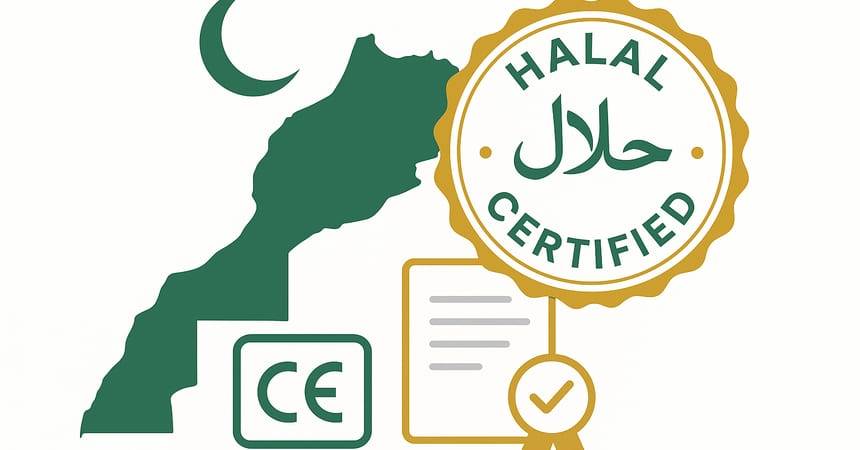
With more than 99% of its population practising Islam, Morocco treats halal as a market condition. Certification has moved well beyond food into cosmetics, pharmaceuticals, logistics and tourism, and is regulated nationally alongside recognised OIC/SMIIC-aligned certificates.
Why Morocco takes halal seriously
More than 99% of Morocco’s population practises Islam, which makes halal-compliant goods strategically important for local producers and foreign exporters alike.
In recent years certification has moved well beyond food. It now reaches cosmetics, pharmaceuticals, logistics and even tourism services, so for companies targeting the Moroccan market it has become a competitiveness tool and no longer only a category requirement.
The four sectors
Food. The main focus is meat, dairy and confectionery. Demand for imported goods is growing steadily, especially poultry, beef and ready-to-eat products.
Cosmetics and perfumery. A young population and global trends drive steady demand. Morocco’s halal cosmetics market grew by more than 12% in 2023.
Pharmaceuticals. Medicines are increasingly required to prove halal compliance, particularly capsules, supplements, and products with animal-derived components.
Services. Tourism and logistics are adopting halal standards, which creates opportunities beyond product manufacture.
What is halal certification?
Halal, from the Arabic for “permissible”, is a system of rules governing the production, processing and distribution of goods and services under Sharia.
In Morocco it is regulated by national standardisation authorities, with IMANOR as the national standards body. International and regional certificates aligned with OIC/SMIIC standards are also recognised.
What do exporters have to meet?
Food products
- Ban on pork and its derivatives
- Ban on alcohol and alcohol-based ingredients
- Animals slaughtered according to Sharia rules
- Production lines separated from non-halal products
That last requirement is the one that most often needs a change in the plant rather than in the recipe, and it is the hardest to retrofit.
Cosmetics and pharmaceuticals
- Exclusion of animal-derived components not compliant with Sharia
- Ban on alcohol-based ingredients
The alcohol prohibition is more consequential in cosmetics than it sounds. Ethanol appears widely as a solvent and preservative, so certification frequently requires reformulation and not only documentation.
Sources
- IMANOR, Institut Marocain de Normalisation
- OIC/SMIIC, Standards and Metrology Institute for Islamic Countries, halal standards series
Frequently asked questions
Who regulates halal certification in Morocco?
National standardisation authorities, with IMANOR as the national standards body. International and regional certificates aligned with OIC/SMIIC, the Organization of Islamic Cooperation standards, are also recognised, so an exporter is not always starting from nothing.
What do the food requirements involve?
A ban on pork and its derivatives; a ban on alcohol and alcohol-based ingredients; slaughter according to Sharia rules; and production lines separated from non-halal products. The line separation requirement is the one that most often means physical changes in the plant, and it is the hardest to retrofit.
Does halal apply outside food?
Increasingly. Cosmetics and perfumery is a growing segment, Morocco's halal cosmetics market grew by more than 12% in 2023, and pharmaceuticals must increasingly prove compliance, particularly capsules, supplements and products with animal-derived components. Tourism and logistics are adopting halal standards too.
Not sure which of these applies to your product? Send it and we will tell you
Related articles
Certificates Required to Export to Morocco
Moroccan NM standards are largely harmonised with European ones, so ISO and CE do real work. Which certificates each sector needs, and four common mistakes.
Halal Certification for Supplements in Morocco
When a supplement needs a halal certificate, which international bodies IMANOR recognises, the documents required, and a 3 to 6 week timeline.
Registering Dietary Supplements in Morocco
Morocco has no separate supplement category, products register as food or as pharmaceuticals. That classification sets the route and the document package.