EAC Certification of Lighting Fixtures and Equipment
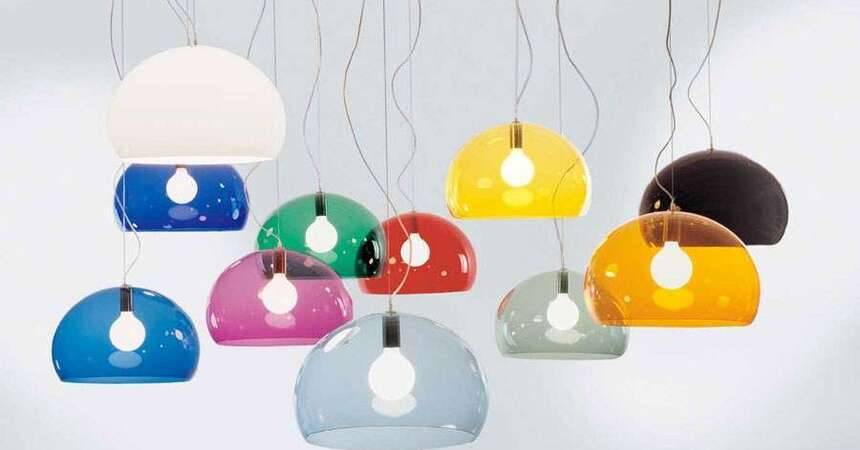
Lighting fixtures for the Customs Union are assessed against three regulations at once: TR CU 004 for low-voltage safety, TR CU 020 for electromagnetic compatibility, and TR EAEU 037 for restricted substances. Certification runs on scheme 1c, 3c or 4c, and 1c adds a production audit report to the test results.
Which lighting needs EAC certification?
EAC certification is required to export to the five EAEU member states.
Mandatory certification applies to fixtures equipped with:
- Incandescent lamps
- Fluorescent lamps, including those with built-in starting regulators
- LED lamps
And regardless of lamp type, to these fixtures:
- Portable
- Stationary
- Lighting devices for aquariums and swimming pools
- Lighting equipment for professional photography
Auxiliary equipment is certified as well: power supplies, step-down transformers and dimmers. These are frequently forgotten, because they are bought as components rather than as products.
Which regulations apply to lighting?
| Regulation | Covers |
|---|---|
| TR CU 004/2011 | Low-voltage devices and lighting equipment |
| TR CU 020/2011 | Electromagnetic compatibility |
| TR EAEU 037/2016 | Restriction of certain hazardous substances in electrical and electronic equipment |
What does certification involve?
- Fixtures must meet the maximum permissible values for light efficiency, with the standard depending on the fixture’s purpose.
- A mandatory certificate is obtained under scheme 1c, 3c or 4c.
- After identification, the selected typical models are tested in an accredited laboratory.
- A conclusion on safety is issued from the results.
- The laboratory tests to the GOST standards adopted alongside the TR CU.
What scheme 1c adds
Positive test results are not sufficient on their own. Scheme 1c also requires a production audit report, in which experts attest:
- Infrastructure
- Personnel
- Documentation
- Technological and metrological equipment
- Incoming and routine inspection procedures
- Conditions of product storage
- How claims are handled
Read that list before choosing a scheme: it describes an assessment of the factory as an organisation.
Test standards by fixture type
| Fixture type | Test standards |
|---|---|
| General purpose portable, children’s, hand-held, garden, with built-in transformers or converters for incandescent lamps; general stationary except street and road; clinical areas of hospitals and other medical facilities; stage, television, film and photo studio; non-professional photography and filming | IEC 60598-2-13-2010, IEC 60598-2-23-98, IEC 598-2-25-98 |
| Lighting chains, illumination and decorative string lights | IEC 60598-2-20 |
Household fixtures for incandescent and fluorescent lamps have their own applicable standards within the same series.
Sources
- TR CU 004/2011, On the safety of low-voltage equipment, Eurasian Economic Commission
- TR CU 020/2011, Electromagnetic compatibility of technical means
- TR EAEU 037/2016, On restriction of the use of hazardous substances in electrical and electronic products
- IEC 60598 series, Luminaires. Particular requirements
Frequently asked questions
Which lighting products need EAC certification?
Fixtures using incandescent, fluorescent, including those with built-in starting regulators, and LED lamps. That covers portable and stationary fixtures, lighting for aquariums and swimming pools, and professional photography lighting. Auxiliary equipment is included too: power supplies, step-down transformers and dimmers.
What does scheme 1c add?
A production audit report, on top of positive test results. Experts assess the manufacturer's infrastructure, personnel, documentation, technological and metrological equipment, its incoming and routine inspection procedures, product storage conditions, and how it handles claims.
Is energy efficiency assessed?
Yes. Lighting fixtures must comply with the maximum permissible values for light efficiency, and the standards applied depend on the purpose of the fixture. It sits alongside the safety assessment and replaces no part of it.
Not sure which of these applies to your product? Send it and we will tell you
Related articles
EAC Approval for Power Adapters and Chargers
One certificate covers TR CU 004 and 020; RoHS goes on a separate declaration. The four steps, the annual inspection, and why RoHS testing takes a month.
EAC Approval for HVAC Systems: Household vs Industrial
Household HVAC needs certificates under TR CU 004 and 020 plus a RoHS declaration. Industrial HVAC needs none of that, it declares under 004, 020 and 010.
Writing Operating Manuals for TR CU 004 and TR CU 020
The mandatory contents of an operating manual under each regulation, the language rule, and when an electronic-only manual is permitted.