
Certifying Radio Frequency Devices in the Customs Union
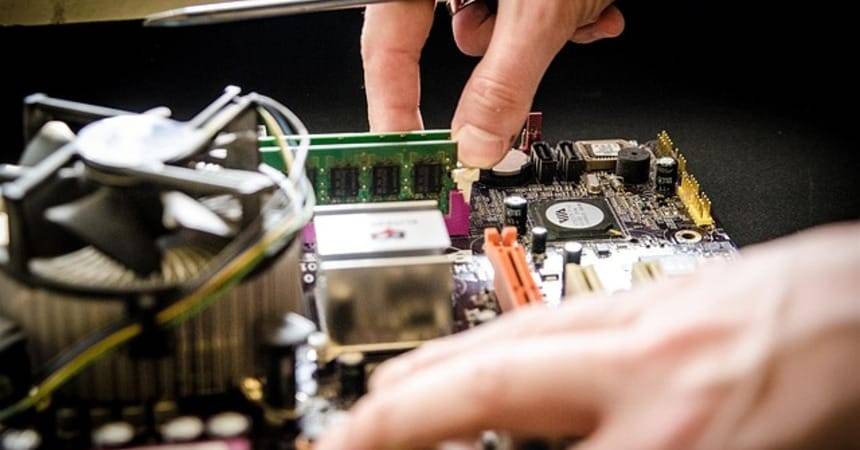
An EAC document issued in one Customs Union state is valid in all of them, but radio spectrum and public network access are not harmonised, so they stay under national law. A wireless product therefore needs EAC safety assessment plus separate national permissions in each destination. And in every case the approval attaches to the finished product, not to the embedded module.
Where does the single market stop?
The five EAEU member states run a unified certification system, and an EAC compliance document issued in one is valid across all of them.
That rule does not extend to every area of non-tariff regulation. Harmonising technical regulations takes time; just over forty are approved and in force. Use of the radio frequency spectrum and safe operation on public access networks are not among them. They remain under each member state’s own legislation.
The consequence for anyone shipping a connected device: you need the product’s technical safety assessed under the Customs Union framework, EMC, general LVD safety, and permission from the spectrum and public-network authorities in every country you intend to deliver to.
Which documents are needed at national level?
| Document | What it is |
|---|---|
| RFC Conclusion | Radio Approval from the Radio Frequency Centre |
| Telecom approval | Declaration or certificate of compliance for communication equipment |
| Encryption notification | Notification covering cryptographic capability |
The RFC Conclusion is issued against the final product only. Characteristics such as radiated power depend on the complete assembly, with or without an antenna, and which antenna, so there is nothing meaningful to test at module level.
Telecom approval works the same way: the document names a specific model of the finished product. This question came up often enough that we wrote to the national telecom regulator for clarification. The response was that a manufacturer must supply legally valid documentary evidence that the module’s power supply, antenna and feeder line, and signal interfaces meet the relevant requirements, and that the declaration meets that requirement where a test report validating the final device containing the module is attached to it.
The encryption notification requires no product testing, but it too is issued for the final product. The application discloses every cryptographic algorithm used. You may reference a previously registered module notification, but customs will check for a notification covering the finished product.
Belarus: same conclusion, one useful exception
Radioelectronic equipment in Belarus falls under TR 2018/024/BY, Telecommunication equipment. Security, which provides for both a declaration and a certificate of compliance.
The final compliance documents still name the final product. However, testing only the embedded module is sometimes allowed, which makes shipping and customs clearance of samples considerably easier. It is decided case by case.
The rest of the Union
Module approval is not available anywhere else in the Union either, for the same reason: what the destination country requires is a compliance document for the finished product being imported.
What should you include in an enquiry?
A brief product description, functionality, frequencies used, transmitter power, and the CNFEA code. Those items establish which of the documents above apply.
Frequently asked questions
Can I certify a radio module once and reuse it across products?
No. Every route ends at the finished product. Radiated power depends on the final assembly, whether an antenna is fitted, and which one, so the Radio Frequency Centre tests the final product. Telecom approval is issued for a specific model. Even the encryption notification, which requires no testing, is checked by customs against the finished product.
Does an EAC certificate cover wireless functionality?
Only the technical safety part, such as EMC and general low-voltage safety. Use of the radio frequency spectrum and operation on public networks fall outside the common Customs Union legislation and are governed by each member state's own law, so national permissions are needed on top.
Is the encryption notification recognised across the Customs Union?
Yes, it is a standardised document recognised in any member state. Each state has one government agency responsible for state security and therefore for the distribution of products capable of encrypting data, such as the National Security Committee in Kazakhstan.
Not sure which of these applies to your product? Send it and we will tell you
Related articles
Certifying Personal Computers for the EAEU
The four documents a PC may need for the Union, TR CU 004 and 020, RoHS, telecom and the encryption notification, plus how the 1c, 3c and 4c schemes differ.
Certification or Declaration Under TR CU 018
Three conformity assessment forms, two of which apply to parts. Where responsibility sits in each, and what decides which one your product takes.
TR CU 018/2011: What the Vehicle Regulation Governs
Scope across categories M, N and O, chassis and safety components; the requirements it sets; and who in the supply chain it binds.