RoHS Test Reports for Saudi Arabia and SABER
RoHS began as a European directive and became a world standard through the electronics industry. In Saudi Arabia the reports have to be issued to local requirements, because they are what registers a product on the SABER platform for its Certificate of Conformity.
What is RoHS, and how far does it reach?
RoHS, Restriction of Hazardous Substances, is a directive of the European Parliament and of the Council on restricting certain hazardous substances in electrical and electronic equipment, in force since 2011.
It binds the European Union directly. Through the globalisation of the electronics industry it became the effective standard on world markets as well, which is why it appears in requirements far outside Europe.
Product groups covered
- Large household appliances
- Small household appliances
- IT equipment and telecommunication equipment
- Household equipment
- Lighting fixtures and systems
- Electrical and electronic tools, except large stationary industrial tools
- Toys and sports equipment
- Automation
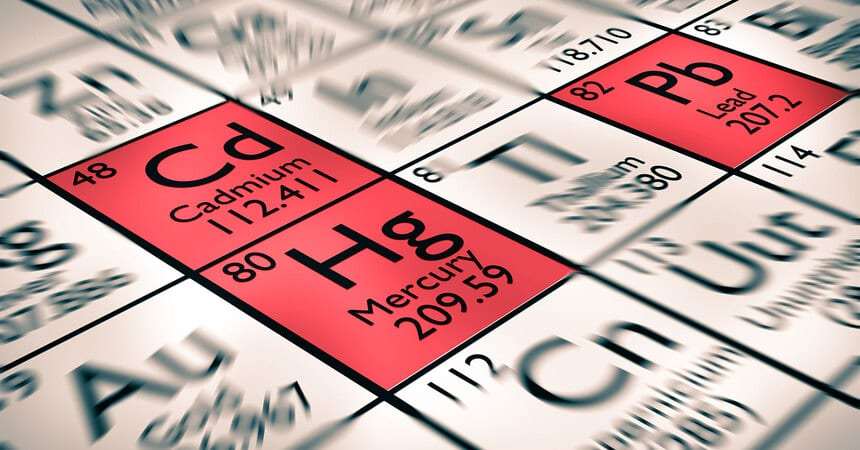
The six restricted substances
| # | Substance |
|---|---|
| 1 | Lead (Pb) |
| 2 | Mercury (Hg) |
| 3 | Cadmium (Cd) |
| 4 | Hexavalent chromium (Cr6+) |
| 5 | Polybrominated biphenyls (PBB) |
| 6 | Polybrominated diphenyl ethers (PBDE) |
Why must RoHS reports for Saudi Arabia meet local requirements?
Test reports must meet local requirements. Those reports are what register a product on the SABER platform.
SABER lets importers and local manufacturers obtain, electronically, the Certificate of Conformity and Certificate of Shipment Conformity needed for consumer goods to enter the Saudi market, whether imported or locally manufactured.
So the reports are not an end in themselves. They are an input to a platform, and a report that does not satisfy the local requirement cannot be used there regardless of how sound the testing behind it was.
The G-Mark, alongside
The G-Mark applies to low voltage electrical equipment (LVE) and children’s toys imported into or sold in the GCC member states:
- United Arab Emirates
- Kingdom of Bahrain
- Kingdom of Saudi Arabia
- Sultanate of Oman
- State of Qatar
- State of Kuwait
How do you get RoHS test reports for SABER?
- Find a laboratory accredited for RoHS testing under Saudi Arabian standards.
- Analyse the documentation to determine how many test reports are needed and what each must contain for the declared products.
- Send samples and test them at that laboratory.
- Issue the RoHS test reports, which are then used to register on SABER and obtain the Certificate of Conformity.
Step 2 is where the cost is decided. The number of reports required follows from how the product range is structured, and establishing that before samples move is what prevents testing the wrong number of variants.
Sources
- Directive 2011/65/EU (RoHS 2), European Union
- SABER platform, Saudi Standards, Metrology and Quality Organization (SASO)
- GSO, GCC Standardization Organization, G-Mark scheme for LVE and toys
Frequently asked questions
Why do RoHS reports for Saudi Arabia need to be issued locally?
Because they must meet local requirements to be usable. The reports are what a product needs to be registered on the SABER platform, and SABER is how importers and local manufacturers obtain the Certificate of Conformity and Certificate of Shipment Conformity for consumer goods.
Which substances does RoHS restrict?
Six: lead, mercury, cadmium, hexavalent chromium, polybrominated biphenyls and polybrominated diphenyl ethers. The list has been stable since the directive came into force in 2011 and is the same one adopted by the EAEU under TR EAEU 037.
What does the G-Mark cover in this context?
Low voltage electrical equipment and children's toys imported into or sold in the GCC member states, the United Arab Emirates, Bahrain, Saudi Arabia, Oman, Qatar and Kuwait. It sits alongside the SABER route rather than replacing it.
Not sure which of these applies to your product? Send it and we will tell you
Related articles
Electrical Equipment Compliance Across the Gulf and MENA
MOIAT, SABER, G-Mark and ESMA are separate schemes with one shared goal. Which products need approval, what the labs test, and what goes in the technical file.
NAS Certification in the UAE: TDRA, ECAS LVE and RoHS
Three mandatory approvals for a network storage device, obtained in under five weeks with no hardware submitted. The documents, timings and fees.
EAEU RoHS: TR CU 037 Schemes and Lead Times
Six restricted substances, a declaration rather than a certificate, and three routes under scheme 1d that turn on which test reports you already hold.